Energy · Electric cars
How to Charge an Electric Car Cheaply at Home: The Cheapest Hours, Step by Step
The car is the biggest electricity user in most homes that have one, and it is also the most patient: it does not care when it charges, as long as it is ready in the morning. Here is how to work out what a charge costs, how long it takes, and how to put it in the cheapest hours.
By Nico Jansen, maker of Sibber··18 min read
🇳🇱 Lees dit artikel in het Nederlands →🇩🇪 Diesen Artikel auf Deutsch lesen →🇧🇷 Ler este artigo em português (Brasil) →🇵🇹 Ler este artigo em português (Portugal) →🇫🇷 Lire cet article en français →🇮🇹 Leggi questo articolo in italiano →🇪🇸 Leer este artículo en español →
The short answer
To charge an electric car cheaply at home, get a tariff where the price depends on the time of day, work out how many hours the charge needs, and let it run in the cheapest hours before you leave instead of the moment you plug in. On a dynamic tariff those hours are usually at night or, on sunny days, around midday, and tomorrow’s prices are known from the early afternoon, so the plan can be made a day ahead.
The five steps:
You come home at six, park the car, plug it in. It is the most natural thing in the world, and on a tariff where the price changes during the day it is also the most expensive moment you could have picked. The early evening is when everyone cooks, heats and charges at once, and the price follows.
The car does not need to start then. It needs to be ready at half past seven tomorrow morning. Between those two moments are thirteen hours, and the charge itself may take three of them. Which three is the whole game.
This guide does the sums with you: what a charge costs, how much energy the car needs on a normal night, how long that takes on your charger, and how to get the charge into the cheap hours without setting an alarm at three in the morning.
How much does it cost to charge an electric car at home?
The cost of a charge is the energy you take from the grid multiplied by the price per kWh at the moment you take it. The first number depends on the car and how far you drive; the second is the one you can influence by choosing the hour.
Take an ordinary week. Someone who drives 40 km a day uses about 7 kWh a day in a car that needs 17 kWh per 100 km, which is a normal figure for a family-sized electric car. Over a year of 15,000 km that is around 2,500 kWh in the battery, and more from the grid. For many households that is as much again as everything else in the house.
That is why the hour matters so much for this one load. The table shows what the same charge costs at different prices per kWh. The prices are examples of the range a dynamic tariff can cover in a single day, all-in, including taxes.
| Price per kWh (all-in) | One charge of 33 kWh | A year of 2,800 kWh |
|---|---|---|
| 35 cents (evening peak) | €11.55 | €980 |
| 25 cents (average hour) | €8.25 | €700 |
| 18 cents (cheap night) | €5.94 | €504 |
| 12 cents (sunny midday, windy night) | €3.96 | €336 |
The exact amounts depend on your country, your supplier and the year, so use your own prices. The point is the spread. Between the evening peak and a cheap night, the same charge can cost half as much, and you have to change nothing except the moment it starts.
How much energy does your car need tonight?
The energy a charge needs is the battery capacity times the percentage you add, plus about 10% that is lost as heat in the charger, the cable and the battery. You rarely charge from empty to full, so the real number is usually much smaller than the size of the battery.
The sum for a typical evening:
- Battery capacity: 60 kWh usable. The car’s manual or the manufacturer’s website gives the usable capacity; it is a little less than the gross figure in the brochure.
- Battery now: 30%. Battery in the morning: 80%. That is 50% of 60 kWh, or 30 kWh into the battery.
- Losses: about 10% on a wallbox, often more on a household socket at low power. So about 33 kWh from the grid.
Most people who charge at home do not need this every night. If you drive 40 km a day, you add about 7 to 8 kWh a day, and a plan that tops the battery up two or three times a week in the cheapest nights works as well as charging daily. Fewer, larger charges in the very cheapest hours usually beat a small charge every evening.
How long does a charge take at home?
A charge takes the kWh you need divided by the charging power: the lower of what your wallbox or socket can deliver and what the car’s on-board charger accepts. This number decides how many cheap hours you need to find.
| How you charge | Power | Time for 33 kWh |
|---|---|---|
| Household socket (Europe, 230 V, 10 A) | 2.3 kW | About 14 hours |
| Wallbox, single-phase 16 A | 3.7 kW | About 9 hours |
| Wallbox, single-phase 32 A | 7.4 kW | About 4.5 hours |
| Wallbox, three-phase 16 A | 11 kW | About 3 hours |
| Wallbox, three-phase 32 A | 22 kW | About 1.5 hours, if the car accepts 22 kW |
| North America, Level 1 (120 V) | About 1.4–1.9 kW | 17 to 24 hours |
| North America, Level 2 (240 V) | About 7–11 kW | 3 to 5 hours |
Two catches. First, many cars accept at most 11 kW on alternating current, and some only 7.4 kW or one phase; the wallbox cannot push more than the car takes. Second, the slower you charge, the less freedom you have. On a socket, a 33 kWh charge needs most of the night, cheap hours or not. On an 11 kW wallbox the same charge fits into the three cheapest hours.
That is the real argument for a wallbox when you have a time-dependent tariff. It is not that the car is full sooner; it is that a shorter charge can be put in the cheapest part of the night, while a long one has to take the expensive hours along with the cheap ones.
Which electricity tariff makes the cheap hours pay off?
Choosing the hour only saves money on a tariff where the price depends on the time: an off-peak tariff with a cheap night rate, an EV tariff with a cheap charging window, or a dynamic tariff that follows the market hour by hour. On a single fixed price per kWh, charging at three in the morning costs the same as at six in the evening.
| Tariff | When charging is cheap | Good to know |
|---|---|---|
| Fixed single rate | Never cheaper by the hour | Certainty about the price; nothing to plan |
| Day/night or off-peak | The same fixed hours every night | Simple: set the car’s schedule once. Check that the window is long enough for your charge. |
| EV tariff (UK and some other markets) | A fixed cheap window, or hours chosen by the supplier for a connected car or charger | Often requires a specific car or charger to be compatible |
| Dynamic | Different hours every day: the market’s cheapest | Needs a smart meter. The largest spread between cheap and expensive, and the most to gain, in both directions. |
A dynamic tariff gives you the market price, in both directions. With an electric car that is usually a good deal, because the car is the one load you can move by hours without noticing. But a cold, still winter week is expensive all day, and no planning changes that. My earlier guide on when electricity is cheapest explains how dynamic prices are made and which part of your bill moves with them.
When are the cheapest hours to charge?
On a dynamic tariff the cheapest hours to charge are usually at night, roughly between 01:00 and 05:00, and on sunny days from spring to autumn also around midday; the most expensive are the early evening hours, when most people plug in. The pattern repeats, but the exact hours move with the weather and the season.
- Winter nights are the reliable cheap hours. The sun adds little, so the night is where demand and price drop.
- Sunny days pull the cheapest hours to the middle of the day, sometimes below zero. Useful if the car is home: working from home, the weekend, a second car.
- Windy days can be cheap almost around the clock.
- Weekends and public holidays are often cheaper than weekdays, because offices and factories use less.
The important thing is that you do not have to guess. In most of Europe, the day-ahead market publishes the prices for every period of the next day around 13:00 Central European Time, and suppliers show them in their apps shortly after. When you plug in at six, you already know every price until midnight tomorrow. Since October 2025 the European market trades in quarter-hours, so a day has 96 prices; some suppliers bill per quarter-hour, others average them to hours.
How to charge cheaply in 5 steps
Charging cheaply comes down to five steps: know how many kWh the car needs, know how long that takes, set a deadline, find the cheapest hours before it, and let something else start the charge. The first three you work out once for your car and your charger. The last two become a habit.
1. Work out how many kWh the car needs
Battery capacity times the percentage you want to add, plus about 10%. From 30% to 80% on a 60 kWh battery is about 33 kWh from the grid. Do this once for your normal week and you will know whether you need to charge every night or two or three times a week.
2. Work out how long that takes on your charger
Divide by the charging power: the lower of the wallbox and the car’s on-board charger. On 11 kW the 33 kWh take three hours; on 3.7 kW nine. If your charge takes longer than the cheap part of the night, charge more often with smaller amounts, so each charge fits.
3. Decide when the car has to be ready
Set two things: the time you leave and a minimum charge you always want, for the unexpected trip to the hospital or the grandparents. Everything between plugging in and the deadline is your window. A longer window gives more chances of a cheap block; a car that is plugged in all weekend can wait for Sunday afternoon.
4. Find the cheapest hours before the deadline
Look at the prices for your window and pick the cheapest hours that add up to your charging time. A car does not need them to be consecutive, but many schedules in cars and chargers only accept one start and one end time; in that case look for the cheapest block that is long enough. Two cheap hours with an expensive one in between can cost more than three average hours in a row.
5. Let something start it for you
Plug in when you get home, but do not let the charge start then. Set the start time in the car or the wallbox, use your supplier’s smart charging if your car and charger are supported, or have your phone tell you when the cheap block begins. The next section compares the options.
Who starts the charge: the car, the charger, the supplier or you?
Something has to start the charge at the right time, and there are four candidates: the car’s own schedule, a smart wallbox, your electricity supplier’s smart charging, or you, after a reminder. Each works; they differ in how much they know about the prices and how much you have to do.
| Who starts it | How it knows the price | What you do | Works best with |
|---|---|---|---|
| The car’s charging schedule | It does not; you set fixed times | Set a start time, or a “ready by” time; change it when the cheap hours move | An off-peak tariff with fixed hours |
| A smart wallbox and its app | Many read dynamic prices or connect to a supplier | Set a departure time and target charge once | A dynamic tariff and a supported wallbox |
| The supplier’s smart charging | It is your supplier: it has the prices | Connect the car or charger in the supplier’s app; set departure time and target | A supported car or charger. Tibber, for example, offers this for integrated cars and chargers. |
| You, after a reminder | An app reads the prices and tells you | Plug in or press start when the reminder comes | Any car and charger, including a household socket |
If your car and charger are supported by your supplier’s smart charging, that is the least work, and you should use it. Many combinations are not supported, though: an older car, a wallbox that came with the house, a socket in the garage. Then a schedule in the car plus a look at tomorrow’s prices, or a reminder at the start of the cheap block, does the same job with one extra tap.
A note for Great Britain: since 30 June 2022, new home charge points sold there must meet the Electric Vehicles (Smart Charge Points) Regulations. Among other things they must be able to start a scheduled charge with a random delay of up to 30 minutes, to spread out demand on the grid. Do not be surprised if a charge set for 00:30 starts at 00:47.
What about solar panels and negative prices?
With solar panels, the cheapest energy for the car is often your own, around midday, and on a dynamic tariff the hours with negative prices are the moments to charge and to stop feeding in. The two goals point at the same hours.
On a sunny day with little demand, the market price can drop below zero for several hours. If your feed-in price follows the market, you then pay to deliver your solar power to the grid, and the car is the best place to put it. If the car is at home, start the charge when the negative block begins and switch it off when the price is back above zero. If the car is at work, the reasoning goes the other way: charge at night, and think about switching the inverter off during the negative hours.
A home battery can help, but storing energy has a cost of its own: each kWh that goes into the battery and out again loses some on the way. Charging the car directly in the cheap hours is usually the better use of those hours than routing them through a second battery first.
Is charging at night bad for the battery?
No. A car on a properly installed charger is made to charge through the night, and charging slowly at home is gentler on the battery than frequent fast charging on the road. What matters more for the battery is how full you keep it.
Follow the manual for your car. As a rule, many manufacturers advise a daily limit of about 80% for batteries with NMC cells and keep 100% for long trips, while cars with LFP batteries are often meant to be charged to 100% regularly so the car can measure the charge correctly. A lower daily target has a useful side effect here: fewer kWh per night means fewer hours to place, so the whole charge fits into the cheapest part of the night.
Two safety points. Use a socket only if the manufacturer says it is suitable for the charging cable, and do not use extension reels. And have a wallbox installed by an electrician, who will also check whether your connection can carry it next to the rest of the house.
What makes home charging more expensive than it needs to be?
Most money is lost in the first hour after you come home, when the car starts charging at the evening peak because nobody told it to wait. These are the mistakes I see most, and what to do about each.
| Mistake | What to do |
|---|---|
| Charging starts the moment you plug in | Plug in when you get home; set a start time or a “ready by” time so the charge waits. |
| A fixed schedule on a dynamic tariff | Fixed times fit an off-peak tariff. On a dynamic tariff, check where the cheap hours fall each day. |
| Charging to 100% every night | Charge what you need. Fewer kWh fit more easily into the cheapest hours. |
| Looking for the single cheapest hour | A charge takes hours. Look for the cheapest hours that together cover the charging time. |
| Charging on a socket with a short cheap window | At 2.3 kW a big charge does not fit. Charge more often in smaller amounts, or consider a wallbox. |
| Comparing the bare market price with your tariff | Market data sites leave out taxes and grid charges. Compare all-in prices. |
| Checking the prices every evening by hand | Decide your rules once and let a schedule, your supplier or a reminder do the watching. |
From battery level to the cheapest hours with Sibber
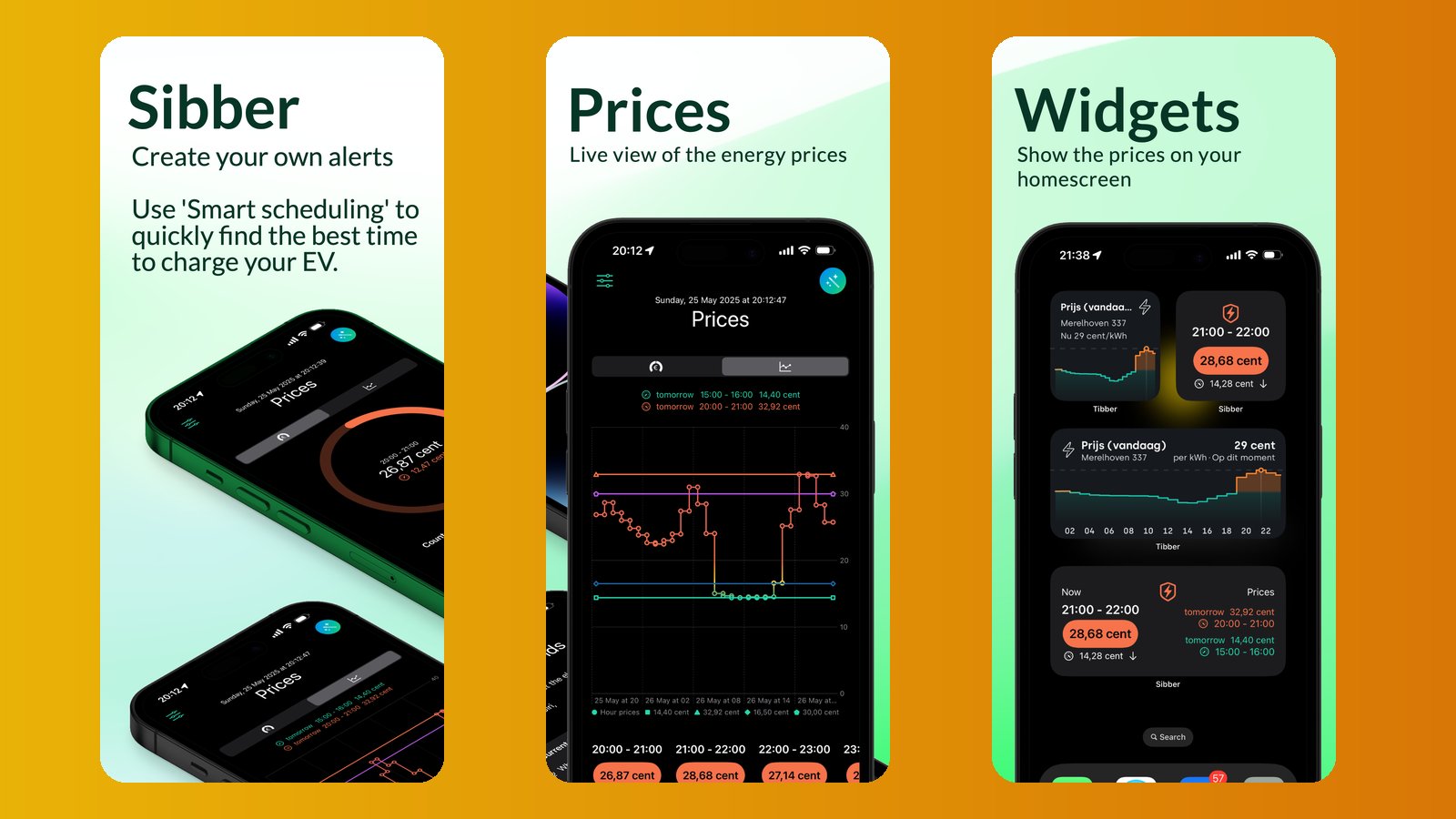
I built Sibber for steps four and five, for Tibber customers. It reads the prices for your home from your Tibber account and turns them into plans and alerts. This is how it handles charging the car:
- Battery level and capacity. Enter how full the battery is and how large it is, and Sibber works out how long the charge will take and which hours are cheapest, so the car is ready when you need it without paying peak prices.
- What you save. Sibber shows how much cheaper the best window is than starting right now, as a percentage, and how it compares with the most expensive window of the day. For the car it also estimates the cost of the charge and the amount you save.
- A reminder before the start. Sibber can nudge you a few minutes before the cheapest window begins, so you can plug in or press start at the right moment.
- V2C chargers. With a supported V2C charger you can let Sibber start and stop charging for you, and lock or unlock the charger from a switch in Control Center. You do not need one: the planning works with any car and charger.
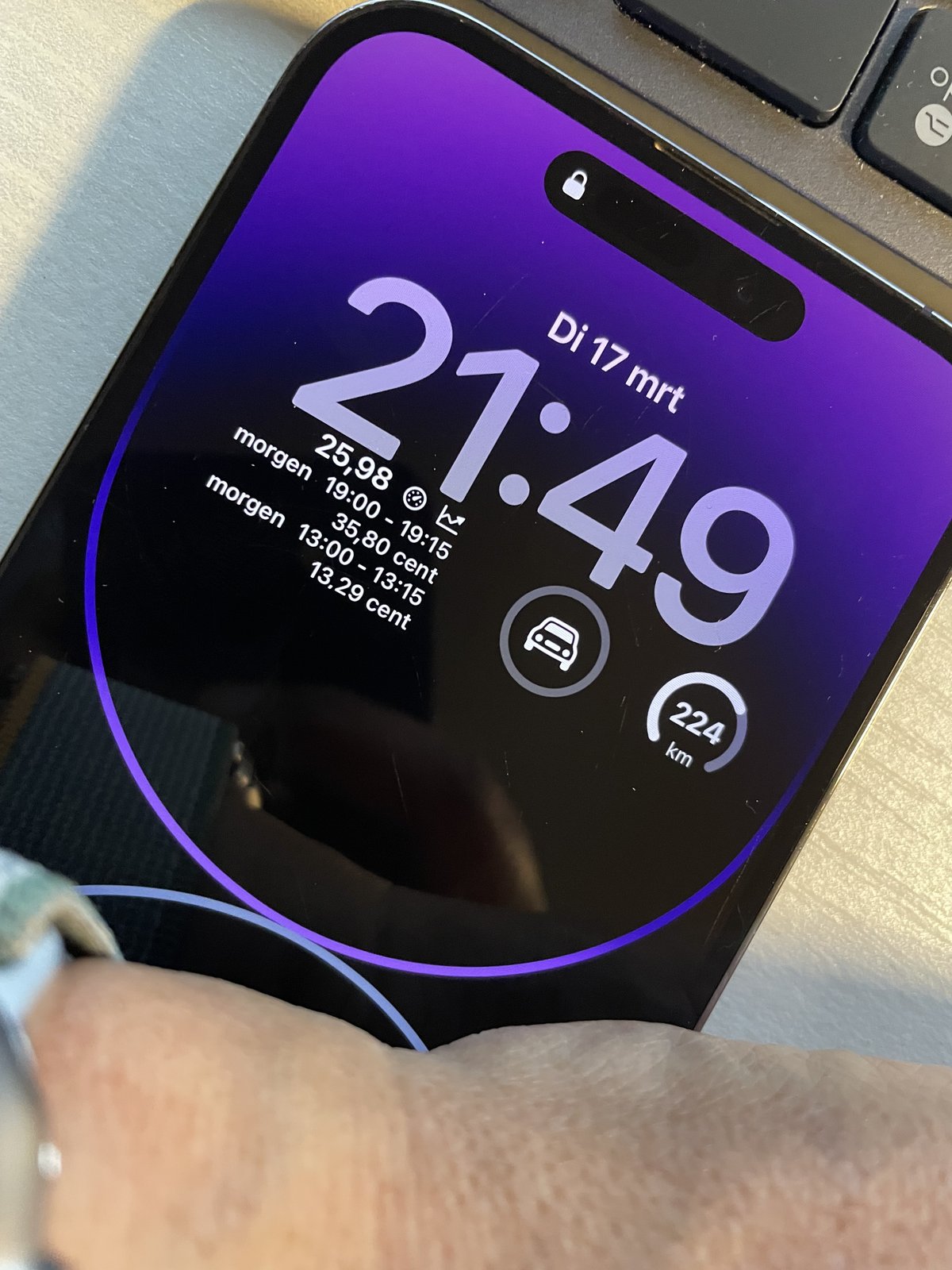
- The cheapest slot without opening the app. A control in Control Center sets an alarm for the cheapest upcoming slot, and the Home Screen widget shows a bell for that slot that turns green once the alarm is set.
- Negative prices. Sibber can notify you when prices turn negative and again when they are back above zero: the moments to start charging on your own solar power, or to switch the panels off and on.
Where it does not fit: Sibber only works if you have a Tibber contract, because that is where it gets your prices. You connect it with your personal Tibber access token; there is no separate Sibber account. Using the app takes a Pro subscription, billed through Apple. The interface is available in English, Dutch, German, French, Spanish, Swedish, Norwegian, Danish, Finnish and Polish.
Frequently asked questions
What is the cheapest time to charge an electric car at home?
On a dynamic tariff the cheapest hours are usually at night, roughly between 01:00 and 05:00, and on sunny days from spring to autumn also around midday. The most expensive time is usually the early evening, between 17:00 and 21:00, which is exactly when most people come home and plug in. On a fixed off-peak tariff the cheapest time is the off-peak window in your contract.
How do I calculate the cost of charging my car at home?
Multiply the energy you add by the price per kWh. The energy you add is the battery capacity times the percentage you charge, plus about 10% for losses. Charging a 60 kWh battery from 30% to 80% takes about 33 kWh from the grid; at 25 cents per kWh that is about €8.25, at 15 cents about €4.95.
How long does it take to charge an electric car at home?
Divide the kWh you need by the charging power. A household socket gives about 2.3 kW, a single-phase wallbox 3.7 or 7.4 kW, a three-phase wallbox 11 or 22 kW. Adding 33 kWh takes about fourteen hours on a socket, nine at 3.7 kW, four and a half at 7.4 kW and three at 11 kW, if the car can take that power.
Do I need a smart charger to charge in the cheapest hours?
No. Most electric cars have a charging schedule in their own settings or app, and you can start a charge by hand at the right time. A smart charger, or a car that your supplier can control, makes it automatic: it reads the prices and starts and stops the charge for you.
Is it cheaper to charge an electric car at night?
Usually, yes. On a dynamic tariff night prices are low because demand is low, and on an off-peak tariff the night is the cheap window by contract. On sunny days in spring and summer the middle of the day can be cheaper still, but the car is often not at home then.
Should I charge my car to 100% every night?
Follow your car’s manual. Many manufacturers advise a daily limit of around 80% for batteries with NMC cells and a regular full charge for LFP batteries. Charging less also means fewer hours to place, which makes it easier to fit the whole charge into the cheapest part of the night.
Does charging in the cheap hours still save money with a home battery or solar panels?
Yes, but the question changes. With solar panels the cheapest energy is often your own, in the middle of the day, and with a dynamic feed-in price the hours with negative prices are the ones to use your own power. A home battery can shift energy too, but it loses some on the way in and out, so charging the car directly in cheap hours is usually the better deal.
Which iPhone app finds the cheapest hours to charge my electric car?
For Tibber customers there is Sibber, an app for iPhone, iPad and Apple Watch. You enter your battery level and capacity and when the car has to be ready, and Sibber works out how long the charge takes, which hours are cheapest and what you save compared with plugging in right now. It can remind you when to start, and with a supported V2C charger it can start and stop the charge itself. Sibber only works with a Tibber contract, and using it takes a Pro subscription.