Genealogy · Stepfamilies
How to Show a Blended Family in a Family Tree: Stepchildren, Half-Siblings and Remarriage
Family tree templates assume two parents, four grandparents and children who belong to both. Real families have second marriages, stepchildren and half-brothers. Here is how to record them so the tree is correct and everyone can find their place in it.
By Nico Jansen, maker of Gramps2··17 min read
🇳🇱 Lees dit artikel in het Nederlands →🇩🇪 Diesen Artikel auf Deutsch lesen →🇫🇷 Lire cet article en français →🇪🇸 Leer este artículo en español →🇮🇹 Leggi questo articolo in italiano →🇵🇹 Ler este artigo em português (Portugal) →🇧🇷 Ler este artigo em português (Brasil) →
The short answer
To show a blended family in a family tree, record every relationship as its own couple and attach each child only to their own two parents, so stepchildren, half-siblings and stepsiblings follow from the links instead of being drawn in by hand. Mark adoption and foster care as what they are, put dates on marriages and divorces, and use notes for what a line cannot show, such as who raised whom.
The six steps:
Sooner or later every family tree runs into it. A grandfather who married twice. A mother who brought two children into her second marriage. A half-sister you grew up with and a stepbrother you met at the wedding. The template has two boxes above each child, and your family does not fit in them.
It is also one of the most common questions people ask about family trees, from genealogists with a remarried great-grandmother to a parent helping a child with a school assignment. It usually comes down to one question: how do I add my stepchildren without making them my own children?
The answer is the same in every program and on paper: let the tree record who the parents are, and let the step relationships follow from the marriages. This guide explains how, with the terms, the chart conventions, what the big genealogy websites do, and the care a blended family deserves.
What is a blended family in a family tree?
A blended family is a family in which at least one partner brings children from an earlier relationship, so the household holds stepparents, stepchildren and often half- or stepsiblings. Stepfamily means the same thing. In a family tree, it means that not every child in a household is the child of both adults in it.
That is not new. Before modern medicine, many people lost a spouse young and married again, and the children of both marriages grew up together. Genealogists have always dealt with this. What changed is that today the first partner is usually still alive, and is part of the family story too.
These are the relationships you will meet, and how each one comes about:
| Relationship | What it means | Blood relatives? |
|---|---|---|
| Stepparent | The partner of your parent, who is not your parent | No |
| Stepchild | The child of your partner from another relationship | No |
| Half-sibling | A brother or sister who shares one parent with you | Yes, through the shared parent |
| Stepsibling | A child of your stepparent from another relationship | No |
| Adopted child | A child who legally became the child of the adoptive parents | Not to the adoptive parents |
| Foster child | A child cared for by foster parents, without a change of legal parents | No |
| Former partner | A spouse or partner the relationship has ended with | No, but often the parent of children in the tree |
Not one of these needs a special drawing. Each follows from two simpler facts: who is in a couple with whom, and who the parents of each child are. Get those two right and the rest takes care of itself.
What is the difference between a half-sibling and a stepsibling?
A half-sibling shares one parent with you, and a stepsibling shares none: a stepsibling is the child of your stepparent. Half-siblings are blood relatives. Stepsiblings are related only through the marriage of their parents.
| Half-sibling | Stepsibling | |
|---|---|---|
| Shared parents | One | None |
| Related by blood | Yes | No |
| Average shared DNA | About 25% | 0% |
| Where they sit in the tree | Under the shared parent, with a different other parent | Under their own parents, next to your family |
| Stays related after a divorce | Yes | Only by custom |
Full siblings share about 50% of their DNA on average, half-siblings about 25%. That is why a DNA test sometimes reveals a half-sibling nobody knew about, and why genealogists care about the difference.
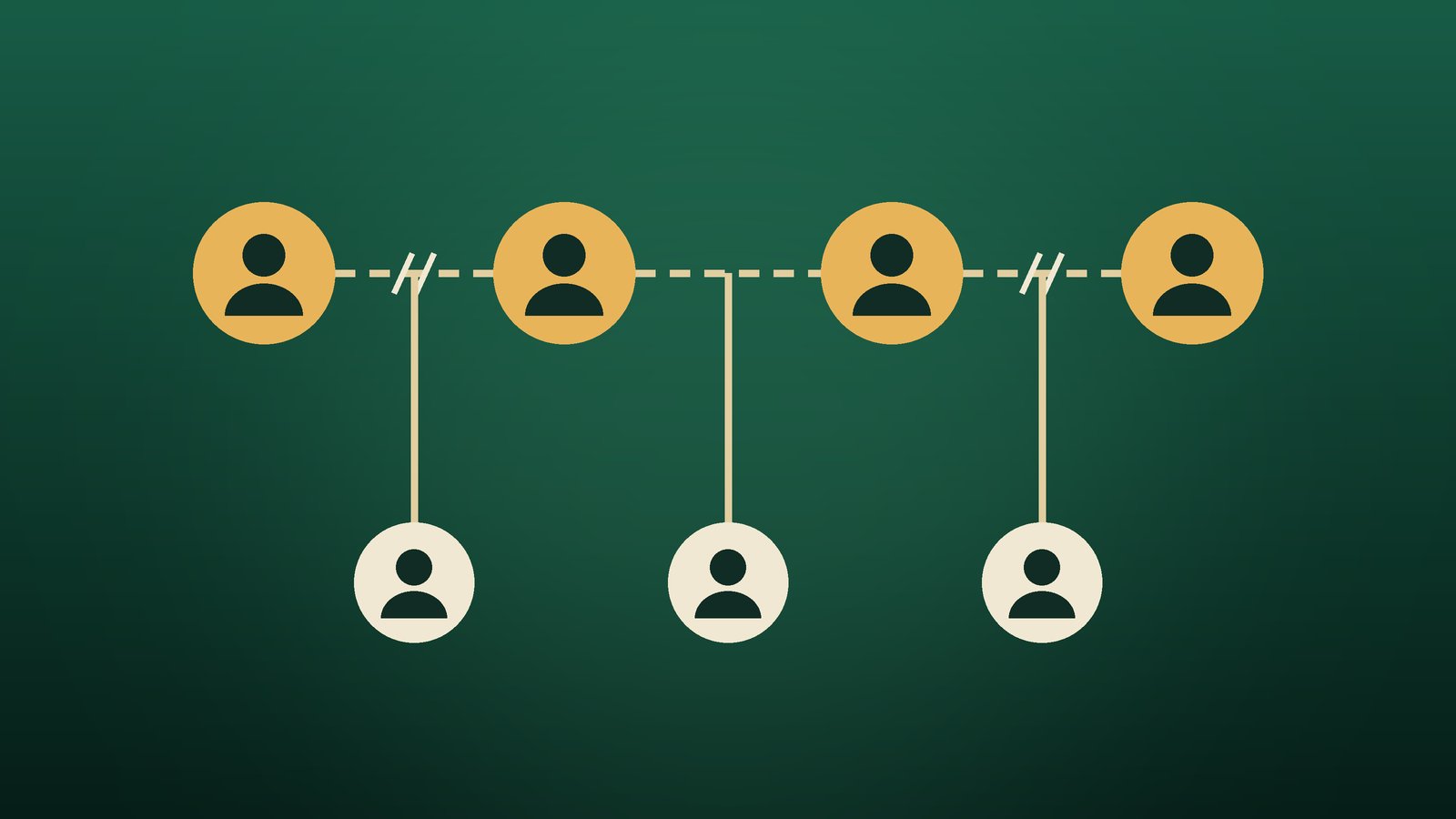
A child born to a stepfamily, from the new couple, is the half-sibling of the children each partner brought along. In the illustration above, the middle child is the half-sibling of both others, while the left and right child are stepsiblings of each other. Many families simply say “brother” and “sister” for all of them, and that is fine. The tree should still record the facts.
Watch out for older usage. In older English, and in many other languages, the words for half-sibling and stepsibling get mixed up, and in records from a century ago a “step-brother” can mean a half-brother. Check against the parents named in the records before you link anyone.
How do you add a stepchild to a family tree?
Add a stepchild as the child of their own parent and their other birth parent, not as the child of the new couple. The stepparent is then the partner of the child’s parent, and the step relationship follows from that.
The most common mistake is the shortcut. You open the new couple, choose “add child”, and enter the stepchild. On screen the household looks right. In the data, the stepparent is now recorded as a birth parent. Every chart, every relationship calculation and every GEDCOM export repeats that error. The stepparent’s own ancestors become the stepchild’s ancestors, and a later DNA match will not fit.
The correct order:
- Add the earlier couple. The child’s parent and the other birth parent, as a couple, with the dates you know.
- Add the child to that couple. If the other parent is unknown, add the child to the one known parent only.
- Add the new partner. As a second partner of the child’s parent, with the marriage date.
- Check how it shows. Good software now shows the child as a stepchild of the new partner, without a parent link between them.
What if you do not know or do not want to enter the other birth parent? Then add the child to their known parent alone. That is honest, and it still keeps the stepparent out of the parent slot. Some websites let you add the stepparent as a parent with the type “step” as well. That works too, as long as the type is set, because a step link that looks like a birth link is the exact problem you were avoiding.
How do you show divorce and remarriage?
Record each marriage or partnership as its own couple, with its own dates, and keep the earlier ones in the tree after a divorce or a death. A person with three marriages has three couples, and each set of children sits under the couple they came from.
Deleting the first marriage is tempting when it ended badly. Do not. The children of that marriage need it to have two parents in the tree, and their descendants need it to find their ancestors. If the subject is painful, leave out the details, not the link.
Things that make remarriage readable:
- Dates on every couple. Marriage date, and a divorce date or the death of the partner. They put the partners in order, and they explain why a child born in 1952 belongs to the first marriage and not the second.
- Partners who never married. Add them as a couple too. Most software lets a couple exist without a marriage date.
- The same person, once. A woman who married twice is one person with two partners, not two people with the same name. With a changed surname, search before you add.
- Widowhood next to divorce. In older records most second marriages follow a death, not a divorce. The death date of the first spouse is often the clue that leads you to the second marriage.
On drawn charts there is a common convention, borrowed from the genograms used in family therapy and social work: partners are joined by a horizontal line, one short slash across it means separated, and two slashes mean divorced. Children hang from the line of the couple they came from. If you draw a tree by hand, that is all you need.
How do you record adoption and foster care?
Record an adopted child as the child of the adoptive parents with the relationship type “adopted”, and, where it is known and welcome, the birth parents as a second set of parents. Foster care works the same way, with the type “foster”, but without a change of legal parents.
Adoption is where a tree touches identity, so the order of questions matters. The first is not how, but whether: does the person know, and do they want their birth family in a tree that others can see? For an adoptee who is alive, that is their call. For an adoption a century ago, it is usually history, and often the key to a whole branch.
Practical points:
- Two parent sets, not one mixed set. Keep the adoptive parents together and the birth parents together. Never pair one adoptive parent with one birth parent.
- Mark the type. Most genealogy software assumes a link is biological unless you change it.
- Old adoptions were often informal. A child raised by an aunt or by grandparents, without any court, appears in a census as “grandson” or “niece”. Record what the source says, and explain it in a note.
- A stepparent adoption is both. When a stepparent adopts a stepchild, the child becomes their legal child. Record the adoption, and keep the birth parent in the tree as birth parent.
- Donor conception and surrogacy. The same principle: legal and biological parents can differ, and a note says which is which.
How do the big genealogy websites handle it?
The big genealogy websites let a child have more than one set of parents and let you set the type of each parent link, such as biological, adopted, step or foster. The labels and menus differ per site.
| Website | Relationship types for a parent | More than one set of parents? |
|---|---|---|
| Ancestry | Biological, adopted, step, foster, related, guardian, private, unknown. Set via Edit relationships on the person’s profile. | Yes. You mark one set as preferred; that set is shown in the tree view. |
| FamilySearch | Biological, adopted, step, foster, guardianship. A new link is biological until you change it. | Yes, for example the birth parents and the adoptive parents. |
| MyHeritage | Biological by default; adoptive and foster parents can be set through Manage parents. | Yes. |
On all three, people are added as biological relatives unless you say otherwise. That makes the shortcut from the previous section easy to fall into: a stepchild added in a hurry is a birth child in the data. Menus change over time, so check the help pages of the site when you set this up. Our comparison of genealogy software covers these platforms and the desktop programs in more detail.
What happens to step relationships in a GEDCOM file?
A GEDCOM file stores families, not step relationships: each couple is a family record with its children, and a step relationship follows from a person belonging to two families. That is why the advice in this guide also keeps your tree portable.
In GEDCOM, a person who married twice is a partner in two family records. A child is linked to the family they were born or adopted into. The format has a pedigree field for that link, with values such as birth, adopted and foster. There is no “stepchild” link: the program that reads the file works it out from the marriages.
Two consequences:
- A stepchild added as the couple’s child stays wrong. In the file it is a birth child of both, and every program that imports it will think so too.
- Not every program reads every detail. Some websites write relationship types in their own extra tags, which other programs may skip. After moving a tree, check a few adoptions and stepchildren, and repair them by hand where needed.
For how the format works and what survives a transfer, see what is a GEDCOM file.
How to draw a blended family tree in 6 steps
A blended family tree comes together in six steps: the adults and their partnerships first, then the children per couple, and only then the step relationships, adoptions, notes and the chart.
1. Start with the adults and every partnership
Add each adult once. Then add each relationship as its own couple: the first marriage, the second, the partner someone lived with for twenty years without marrying. Put the dates on each couple, even if they are only a year.
2. Attach every child to the right couple
Go through the children one by one and ask one question: who are this child’s two parents? The answer decides the couple they go under. A child whose father is unknown goes under the mother alone.
3. Let the step relationships follow
Now look at the result from a stepparent’s page. Their stepchildren should be visible as stepchildren, through their partner. If one shows up as their own child, the child is under the wrong couple. Fix the link, not the label.
4. Record adoption and foster care as what they are
Where your software supports parent types, set them. Where it does not, write it in a note on the child: “Adopted by Jan and Els in 1981; birth mother Maria.” A note is less elegant than a field, but it is never lost and every reader understands it.
5. Write down what a line cannot show
A chart shows links, not lives. Who raised whom, which children lived together and for how long, the stepfather who was “dad” for thirty years, a name change after a remarriage, a guardian after a death: put it in a note on the person. These notes are often what the next generation wants to read.
6. Choose the chart for the question
Decide what the chart should answer, and pick the type that answers it. The next section shows which chart does what.
Which chart shows a blended family best?
A descendant or hourglass chart shows a blended family best, because it shows partners and children side by side; a pedigree chart shows ancestors only, so stepfamilies disappear from it. That is not a flaw: it answers a different question.
| Chart | What it shows of a blended family | Use it for |
|---|---|---|
| Pedigree chart | Only birth (or adoptive) parents, grandparents and further back. No partners, no siblings. | Where one person comes from |
| Descendant chart | A couple or person and everyone after them, with all partners and their children. | All children of a grandfather who married twice |
| Hourglass chart | One person in the middle with ancestors above and descendants below. | A household seen from one parent |
| Family group sheet | One couple with their children, dates and places. One sheet per marriage. | Checking each marriage with relatives |
| Genogram | Households, marriages, divorces and who lives with whom, with symbols. | School projects, family therapy, the story of a household |
For a school assignment the question is usually “who is your family?”, and the honest answer for a child in a blended family is the household plus both sides. Put the child in the middle, their parents above, each parent’s partner next to them, and the siblings in a row. Let the child decide who is in it. A stepfather who is there every day belongs on that chart, whatever the records say.
A tree the whole family can live with
A family tree is read by the people in it, so record the facts, but decide with care what you show and to whom. In a blended family, the same tree is read by children of different marriages, by former partners and by stepparents.
- Same weight for every child. Stepchildren listed apart is correct, stepchildren left out is a message. Put them in.
- Former partners are parents too. A tree that shows the children of a first marriage with only one parent tells them something about their other parent. Add the other parent with their name, even without further details.
- Ask before you share what someone does not know. An adoption, an unknown father, an earlier marriage of a grandparent: a tree can tell someone something nobody has told them yet. Our guide on how to share a family tree has a checklist for this.
- Two families, one tree or two. Each side of a blended family has its own ancestors. Some people keep one tree per side and connect them where they meet, which keeps each tree readable.
And when you do not know how someone wants to be shown, ask them. “Do you want to be in the tree as Tom’s stepdaughter, or just under your own parents?” takes one question, and the answer is usually warmer than you expect.
Stepchildren in their own list with Gramps2
I built Gramps2 as a family tree builder for iPhone, iPad and Mac, and it answers the question this guide started with. Here is how the steps above work in it:
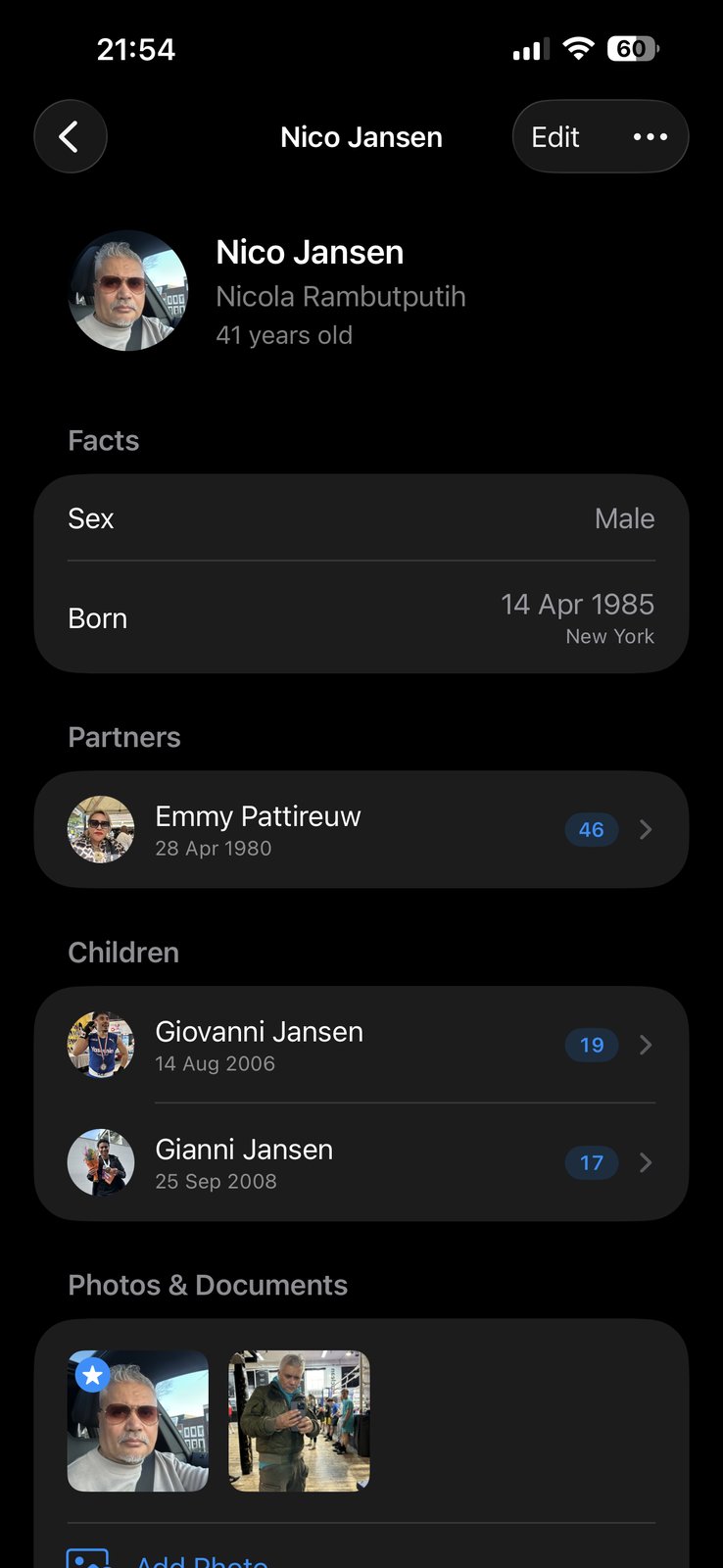
- Stepchildren, kept apart. On your partner’s page, choose Add Child and pick “Only [their name]”. The child is recorded as your partner’s child alone, and on your own page appears in a separate Stepchildren list, clearly apart from your own children. This needs version 1.8 or later.
- The shortcut, undone. Already added a stepchild to the couple? Open the child, swipe left on the wrong parent in the Parents list and choose “Remove as Parent”. The child keeps their photos, notes and other parent, and moves to the Stepchildren list.
- A chart you can read. The chart puts one person in focus with ancestors above and descendants below. Solid lines connect parents and children, a dashed line connects partners. Export it as an image or PDF.
- One tree per side, joined. Keep a separate tree for each side of the family. The “All trees” view joins the same person across trees, so relatives from both sides show up together.
- Shared with both households. Invite family members to a tree through iCloud. Everyone you invite can edit, and changes sync to all participants. The tree is stored in your own iCloud, not on niApps servers.
- GEDCOM in and out. Import a tree from Ancestry, MyHeritage or a desktop program, and export yours the same way.
Notes on each person hold what a line cannot show. Gramps2 is available in English, Dutch, German, French, Spanish, Italian and Brazilian Portuguese.
Frequently asked questions
How do you put a stepchild in a family tree?
Connect the stepchild to their own parent and to their other birth parent, not to the new couple. Then add the new partner as the parent’s partner. The step relationship follows from that marriage. Some programs also let you link the stepparent directly with the relationship type “step”.
Do half-siblings go on a family tree?
Yes. Half-siblings share one parent, so they are blood relatives and belong in the tree. They appear under their shared parent, each with their own other parent. On a pedigree chart of one person, half-siblings do not show, because that chart only shows ancestors.
Are stepsiblings on a family tree?
They can be, but they are not your blood relatives. A stepsibling is the child of your stepparent from an earlier relationship. In a tree they hang under their own parents. They become visible as stepsiblings because one of their parents is married to one of yours.
How do you show divorce on a family tree?
Keep the couple in the tree with their marriage date, and add a divorce date or note. On drawn charts and genograms, a divorce is usually shown with two short slashes across the line between the partners, and a separation with one slash. Do not delete the earlier marriage: the children of that marriage depend on it.
Should adopted children be in a family tree?
Yes. An adopted child is a full member of the adoptive family and belongs in its tree. Record the relationship as adopted where your software allows it, and, if the person wants that, the birth parents as a second set of parents. Ask before you add birth parents of a living adoptee.
Can a person have two sets of parents in a family tree?
In most genealogy software, yes. Ancestry, FamilySearch and MyHeritage let you add more than one set of parents and mark each set as biological, adopted, step or foster, among other types. In a GEDCOM file, a child can be linked to more than one family, with a pedigree type such as birth, adopted or foster.
What is a blended family tree for a school project?
It is a family tree that shows the household a child actually lives in, with stepparents, half-siblings and stepsiblings, instead of only two parents and four grandparents. Draw the child in the middle, their parents above, and each parent’s partner beside them with a dashed line. Let the child decide who is in it.
Which family tree app shows stepchildren on iPhone, iPad and Mac?
Gramps2 is a family tree builder for iPhone, iPad and Mac. When you add a child to one parent only, the child is recorded as that parent’s child alone and shows up in a separate Stepchildren list on the partner’s page. Trees are stored in your own iCloud and can be shared with the family members you invite.